
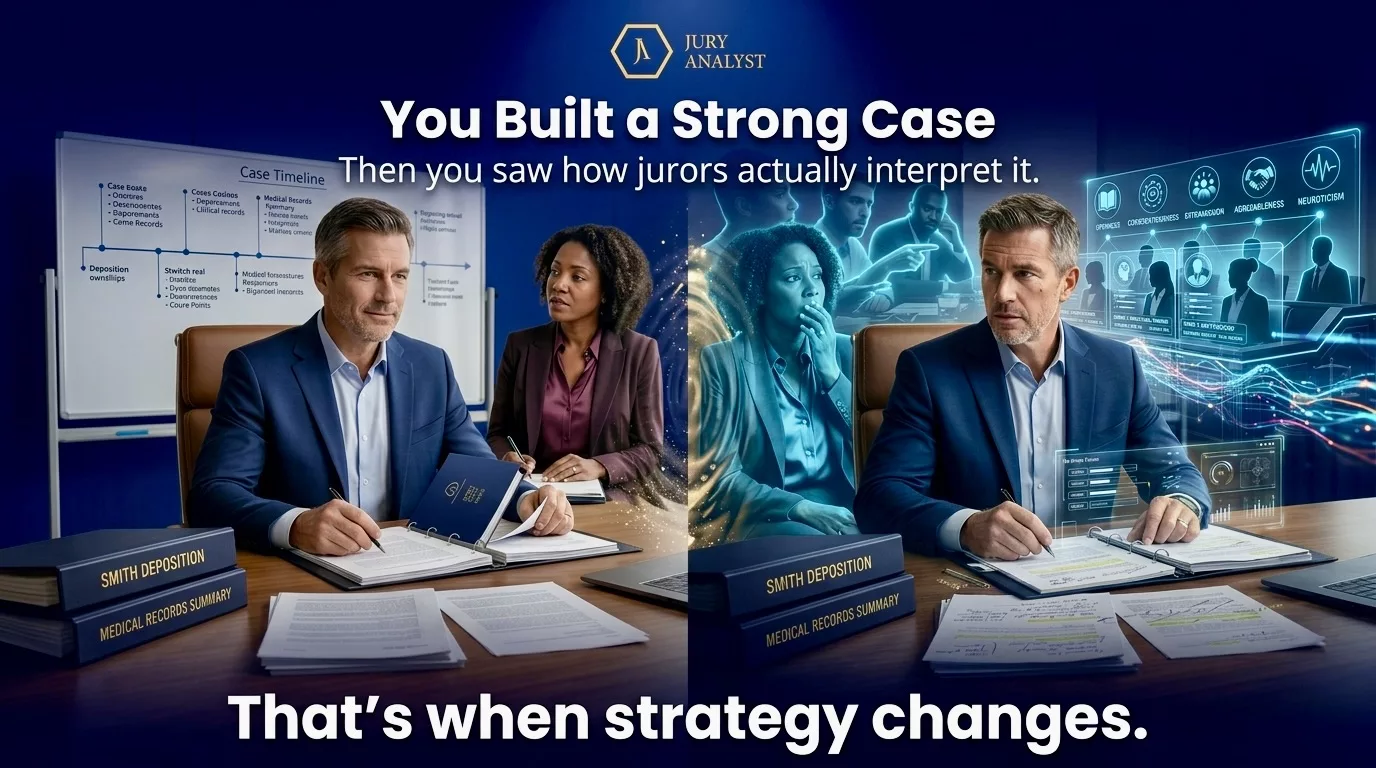
Walk into almost any trial team war room, and the pattern is familiar.
Timelines are mapped. Depositions are distilled into key admissions. Medical records are organized and annotated. The evidence appears strong, even decisive.
Inside that room, the case often feels like a foregone conclusion.
Then deliberations begin.
And something changes.
What once felt certain starts to fracture. Jurors interpret the same evidence in ways no one on the trial team anticipated. Arguments that seemed clear become contested. Credibility shifts. Doubt enters the room.
This is not an anomaly. It is a pattern.
It is the gap between how a case is built and how it is actually decided.
The Problem: Evidence Does Not Decide Cases
Trial lawyers are trained to think in structure and sequence.
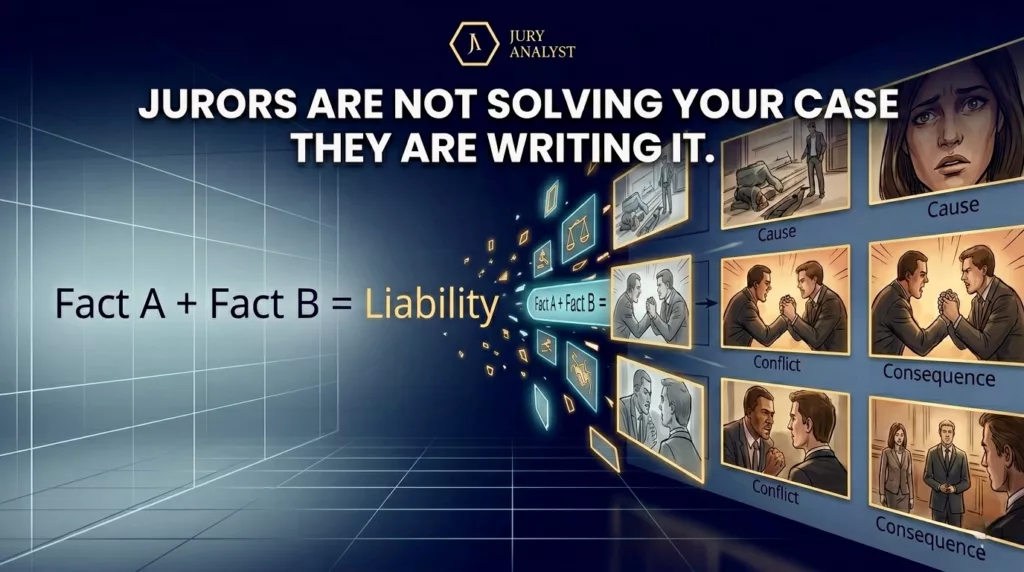
Fact A supports Fact B. Together, they establish liability. Layer in damages, and the outcome should follow.
But jurors are not performing that analysis.
They are not adding facts. They are building a story.
Jurors take the same evidence and organize it into a narrative that feels coherent to them. That narrative is shaped by personal beliefs, prior experiences, expectations about responsibility, and perceptions of fairness.
This creates a fundamental disconnect.
The legal team sees a case built on logic.
The jury experiences a case through interpretation.
And that is where strong cases begin to break.
The Blind Spot: Assuming Evidence Speaks for Itself
For decades, the legal industry has relied on familiar tools to address this gap.
Mock trials. Focus groups. Jury consulting.
These tools can be useful. But they are often introduced late, when discovery is closed, and the case narrative is already largely set.
At that stage, feedback is limited in its impact.
It may reveal problems, but it rarely allows teams to meaningfully correct them.
The deeper issue is structural. Trial preparation has been built around gathering and organizing information, not systematically understanding how that information will be interpreted inside the jury room.
In most industries, that would be considered incomplete.
The Shift: From Feedback to Decision Systems
What trial teams are beginning to build is not another layer of consulting.
It is a Litigation Decision System.
A structured way to translate case information into signals about how jurors will actually interpret and decide the case.
Instead of relying on one-time feedback, this approach focuses on continuous insight throughout the life of a case.
It asks earlier, more useful questions:
- How will jurors interpret this evidence?
- Where might the narrative create confusion?
- Which witnesses introduce credibility risk?
- How could deliberation dynamics shift the outcome?
Answering these questions early changes how cases are built, not just how they are presented.
What a Litigation Decision System Looks Like
Most modern industries rely on systems that convert large volumes of data into actionable insight.
Litigation is beginning to move in that direction.
A Litigation Decision System operates across four core layers:
1. Case Information
Every case generates a large volume of material. Depositions, expert reports, records, exhibits, and internal analyses.
2. Juror Interpretation
Jurors do not evaluate facts in isolation. They interpret evidence through beliefs, expectations, and perceptions of credibility.
3. Scenario Testing
Different juror mindsets can interpret the same case in very different ways. Testing those variations reveals where narratives hold and where they break.
4. Strategic Signals
Insights are translated into action. Discovery priorities, witness preparation, narrative framing, and settlement strategy are all informed earlier in the process.
This is the difference between discovering weaknesses during trial and identifying them while there is still time to adjust.
Why This Matters for Plaintiff Trial Teams
In civil litigation, the burden of proof creates a clear risk.
When jurors are uncertain, they often default to inaction. That typically means ruling against the plaintiff.
This is not just about evidence strength. It is about whether the story built from that evidence feels complete, credible, and aligned with how jurors think about responsibility.
A case can be factually strong and still fail if:
- The narrative feels inconsistent
- A witness creates credibility friction
- Jurors struggle to connect causation
- The story conflicts with common beliefs about risk or accountability
For plaintiff teams, understanding interpretation is just as important as building the case itself.
The Strategic Advantage: Earlier Insight, Better Outcomes
The most important shift is timing.
Traditional approaches identify problems late. A Litigation Decision System surfaces them early, when the case is still flexible.
This creates practical advantages:
- Discovery focuses on narrative gaps, not just document collection
- Witness preparation addresses credibility risks before trial
- Case themes are refined based on how jurors actually interpret responsibility
- Settlement strategy reflects how the case is likely to be decided, not just how it appears on paper
This is not about replacing judgment.
It is about strengthening it with structured insight.
The Future of Trial Preparation
Other industries no longer rely on intuition alone.
They build systems that convert complex information into clear decision signals.
Litigation is beginning to follow the same path.
The firms that adapt will not simply have more information.
They will have a better understanding of what that information means inside the jury room.
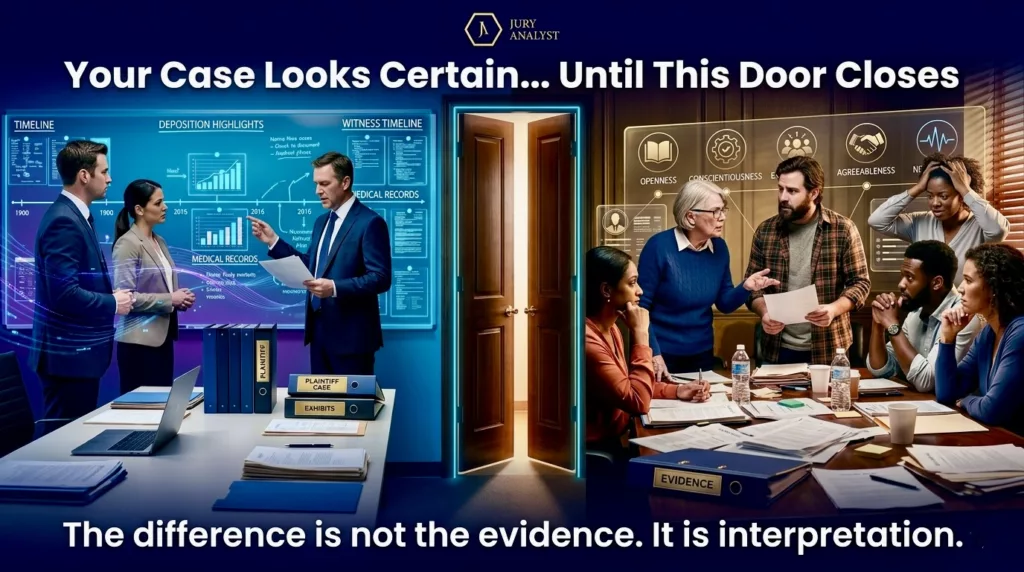
Because the outcome is not determined in the war room.
It is determined in deliberation.
And deliberation is where interpretation, not just evidence, drives the result.
Continue the Conversation
We explore this topic further in the latest episode of the Science of Justice podcast:
When Facts Fail: The Litigation Intelligence Stack
The episode breaks down why strong evidence can fall apart in deliberations and how modern plaintiff teams are using structured systems to understand juror interpretation earlier in the case lifecycle.